Getting a brand guide is one thing. Getting a growing team to use it consistently, across every AI tool, every piece of content, every touchpoint, is another story entirely.
The colours are documented. The fonts are set. The tone is defined. Everything is polished, filed, and shared with the team. And then a post goes out that looks nothing like the brand. A website gets built that checks every box in the brief and still feels completely wrong. A new team member joins and learns the brand from whoever was already guessing.
So someone steps in. Fixes it. Explains what's off and why. Approves the next version. And the one after that.
Then it happens again.
The Brand Guide Isn't the Problem. The Bottleneck Is.
Whether it's the founder, the marketing manager, or whoever the brand responsibility fell to, one person is carrying that standard for everyone else. The brand only holds when that person is in the loop.
Every piece of content, every design decision, every "does this look right?" question quietly routes back to them. They're the only one who actually knows how the brand should feel.
The brand guide exists. The system to use it doesn't come with the file.
A document can tell your team what colours to use. It cannot teach them why a background choice feels wrong, or what the brand is actually trying to communicate, or how a trained eye looks at a layout and knows immediately that something is off. That kind of judgment doesn't live in a PDF. It lives in a person, and right now, that person is doing it alone.
Which means the brand only works when they're watching.
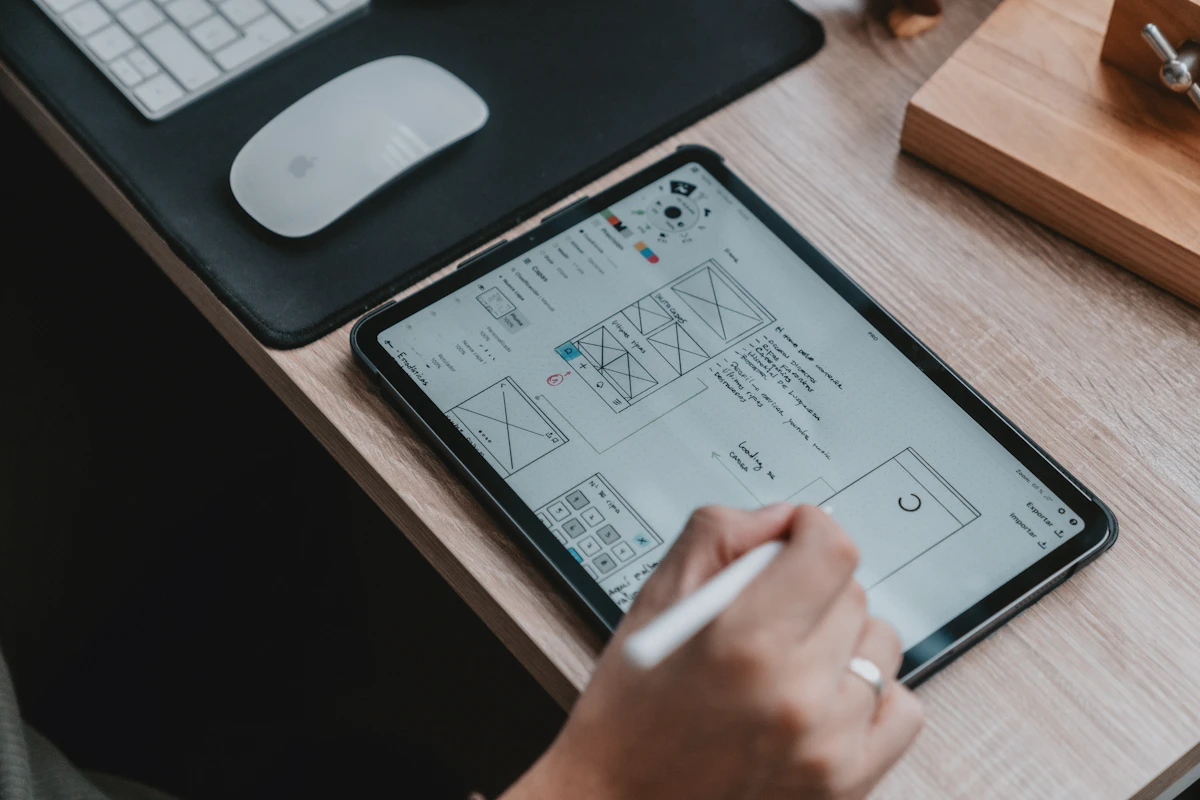
Photo by UX Indonesia · Unsplash
What's Actually Missing Is a Brand System
Not more rules. Not stricter guidelines. Not another template downloaded from a library.
A brand system is the complete infrastructure that makes a brand guide usable in daily work. Templates configured to the brand. AI tools loaded with the brief. Workflows that give the team a repeatable process for producing on-brand content without routing every decision back to the one person carrying the weight.
Most businesses have a brand guide. Very few have a brand system. The gap between the two is exactly where consistency breaks down, especially when the business is scaling, when AI tools are being used to produce content at volume, and when more people are making brand decisions than ever before.
This is not a problem that only affects large teams. A digital business owner working with one VA and three AI tools is already running a content operation that needs a system to hold it together. Without one, every AI output is a guess. Every piece of content is a new interpretation of a standard nobody has actually written down.
A brand guide describes the brand. A brand system is how the team and the AI tools apply it every day, across every touchpoint, with or without the founder in the loop.
Brand Literacy — What the System Develops
When a brand system is in place and the team works inside it daily, something else develops alongside it: brand literacy.
Brand literacy is the trained ability to look at a piece of creative work and evaluate it the way a designer would. Not just whether the colours are correct, but whether the piece feels like the brand. To catch what's off before it goes out. To make the right call without being told what right looks like.
This is the skill that separates a team that follows a brand from a team that can protect one.
Following a brand is compliance. Protecting a brand requires judgment. Judgment develops through repeated use of a system clear enough to measure every decision against.
Brand literacy is not taught in a workshop. It develops through the work itself, when the system is clear enough that every decision can be evaluated against something real, and every correction is an explanation rather than just a flag.
The brand guide tells the team what the brand is. The brand system gives them the infrastructure to develop the judgment to use it well.
The Foundation the Team Works From
The reason most brands drift is not one problem. It is two. The foundation is incomplete or inaccessible. And even when the foundation exists, the system for using it does not.
The starting point is always the brand itself.
The BFF is where the foundation gets built. A structured 90-minute brand strategy session maps purpose, positioning, and persona live. What comes out is not a mood board or a colour palette. It is a complete, working brand system: visual identity direction, a messaging framework, and an AI-ready brand guide delivered in PDF format and as a SKILL.md file that loads your brand directly into the AI tools your team already uses.
The BFF is the document the team has been missing. It gives everyone the same brief to work from: the VA, the developer, the contractor, and the AI tool. Brand literacy starts here, because there is finally something clear enough to develop it against.
Most brand guides are written for humans. The AI-Ready Brand Guide is written in instruction-grade language so that Claude, ChatGPT, Notion AI, and other AI tools can apply the brand consistently, not just humans reading a document.
When an AI tool has the SKILL.md, its outputs reflect the brand's voice, follow the tone rules, and avoid the language the brand has defined as off-brand. Brand drift from AI tools stops when the AI has the brief. Every output sounds like the brand because the AI is working from the same standard the team is.
The Missing Layer Is a Design Leader Who Can Build the System and Train the Team
A brand guide and an AI-ready brief are essential. On their own, they are still not enough if the team does not know how to use them.
This is the gap most businesses never address. The foundation gets documented. The files get shared. Then the team is left to figure it out. Without someone to show them how the brand should feel in practice, every correction is reactive. Every off-brand output gets caught after the fact. The bottleneck stays exactly where it was.
What changes this is having a trained design eye in the room. Someone who can look at the team's actual work, explain what is off and why, build the initial templates they will use from day one, and leave the team with a clear standard they can hold themselves to.
This is not a permanent hire. It is a 1 to 3 month engagement where a Design Leader comes in, gets the team aligned to the brand direction, builds the campaign templates that make consistency achievable, and trains the people who will carry the standard forward.
When a team has been through this, the brand stops depending on one person's judgment. It runs on shared understanding, on templates built to the right standard, and on a team that has learned how to catch drift before it compounds.
The brand guide tells the team what the brand is. A trained design leader teaches them how to protect it. The AI-Ready Brand Guide makes sure every tool they use is working from the same brief.
What This Looks Like in Practice
The breakdown does not always show up the same way. But the root cause is almost always the same. The brand was handed to someone without either a system to run it or the literacy to interpret it.
A VA managing social posts, capable and willing, but without design context, the work drifts quietly. Different background choices, inconsistent font weights, a tone that shifts week to week. Nothing alarming on its own. Just enough, over time, to make the brand feel like it belongs to no one in particular.
With campaign templates built to the right standard and a short engagement where a design leader reviews actual work and explains what's off and why, the VA starts catching the same things before they need to be told. The brand stabilises. The posts go out consistently. The bottleneck disappears.
A developer receives the brand guide and delivers something technically correct, right colours, right fonts, that still looks nothing like the brand. A developer reads a brand guide differently than a designer does. They execute the rules. What doesn't make it into the build is the strategic direction behind them: the breathing room that makes a layout feel considered, the hierarchy that earns a visitor's trust.
The BFF gives the developer not just a colour palette but a complete visual identity direction grounded in strategy, so every design decision has a rationale, not just a specification. The design leader's involvement closes the gap between what was documented and what gets built.
Two different scenarios. One root cause: the brand was handed over without the system, the training, or the leadership that makes it usable.
What Changes When All Three Layers Are in Place
- The team produces on-brand content without a senior review on every output. The templates carry the standard. The brief is in the tools. The team understands what right looks like.
- The developer understands the direction behind the guide, not just the rules. The strategic rationale is documented. The build reflects it.
- The AI tools produce outputs that sound like the brand. The SKILL.md is loaded and working. Every AI output is shaped by the same brief the team is working from.
- The person who used to be the last checkpoint on everything gets their attention back. The brand stops depending on constant supervision. It runs on a system, on shared judgment, and on a team that knows how to protect it.
The brand guide describes the brand. The AI-Ready Brand Guide puts it into every tool the team uses.
A trained design leader is what makes the team capable of protecting it.
Common Questions
Why does a brand guide fail without a system to run it?
A brand guide is a document. A brand system is the infrastructure that makes the document usable in daily work: configured templates, AI tools loaded with the brief, repeatable workflows, and onboarding for the people expected to use it. Most guides fail because there is no deployment path, not because the content is wrong. The guide describes the brand. The system is how the team applies it.
What is the difference between brand guidelines and a brand system?
Brand guidelines are a document, a set of rules for how the brand should look, sound, and behave. A brand system is the infrastructure that makes those rules usable: the configured templates, the AI tools loaded with the brief, the workflows, and the onboarding that gives the team and the tools the same brief to work from. Guidelines tell the team what the brand is. The system is what allows them to apply it consistently at scale.
Why does AI content drift away from my brand?
AI tools produce the average of everything they have been trained on. Without your specific brand strategy loaded into the tool, your voice, your positioning, your audience, the language you use and avoid, the output defaults to generic. It sounds competent. It does not sound like you. Configuring AI tools with a brand brief is what stops the drift. That is what the SKILL.md inside the Brand Foundation Framework does.
What is a brand operating system?
A brand operating system is the complete set of tools, templates, workflows, and configured AI systems that allow a team to produce on-brand content consistently, without routing every decision back to the founder or the most senior person carrying the brand standard. It is not a document. It is an installed system. The Brand Operating System Setup (BOSS) is how Gazeable builds and installs this for digital business owners and their teams.
How do I keep my brand consistent when using AI tools?
The answer is configuration, not supervision. AI tools need the same brief a human team member would need: your positioning, your voice, the language you use and avoid, what the brand should and should not sound like. The SKILL.md file produced in the Brand Foundation Framework is written specifically for this, instruction-grade language that loads your brand into Claude, ChatGPT, and other AI tools so that outputs consistently reflect the brand rather than a generic version of it.
What is brand literacy and how does it develop?
Brand literacy is the ability to evaluate creative work against a brand standard. Not just checking colours, but reading whether something feels right and knowing how to fix it when it doesn't. It develops through repeated use of a clear system, with specific feedback over time. It cannot develop from a one-time handover or a PDF nobody opens. The brand system is what gives the team something clear enough to develop judgment against.
What is the difference between BFF and the AI-Ready Brand Guide?
The Brand Foundation Framework builds the complete brand strategy, visual identity direction, messaging framework, and an AI-ready brand guide in PDF format. The AI-Ready Brand Guide is the document written specifically for AI tools, in instruction-grade language, so that Claude, ChatGPT, and other platforms can apply the brand consistently without a human editing every output. The BFF produces the AI-Ready Brand Guide as part of its deliverables. They work together as the foundation the team and the tools work from.
What does a design leader engagement actually involve?
A 1 to 3 month engagement where a senior designer and brand strategist works alongside the team to align everyone to the brand direction. This includes reviewing actual work and explaining what is off and why, building the initial campaign templates the team will use from day one, configuring the AI tools with the brand brief, and training the people who will carry the standard forward. The goal is to leave the team capable of protecting the brand without ongoing supervision.
How long before the team is running the brand independently?
The BFF is delivered within 10 to 15 business days of your strategy session. A team alignment engagement runs between one and three months, depending on the size of the team and the state of the brand when work begins. By the end of the engagement, the templates are built, the AI tools are configured, and the team has a clear standard they understand well enough to apply and protect on their own.
The Brand Foundation Framework is where it starts. A complete brand strategy, AI-ready brand guide, and SKILL.md your team and AI tools can work from. $1,800 · one-time investment · delivered in 10 to 15 business days.
If your team needs someone to come in, align to the brand direction, build the initial templates, and get everyone working from the same standard, that is a conversation worth having too.
Start A Conversation →